
A fire that started small in a market district would burn for six days and leave a mystery still argued over two thousand years later.
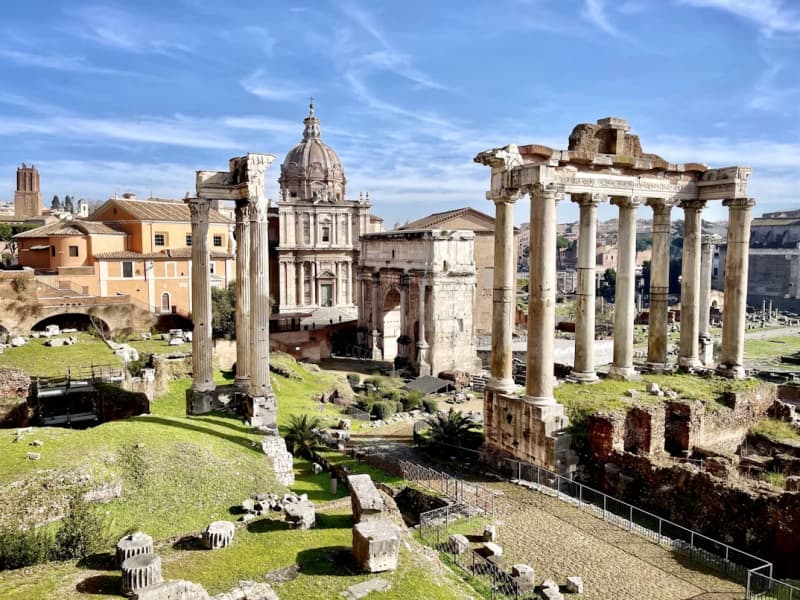
The Fire Begins
On the night of 19 July 64 AD, a fire started during a period of high outdoor temperatures. It began among wooden stalls that stood in a group near the Circus Maximus. As those shops contained large amounts of liquid oil and other items that burn easily, they provided a source for the flames. By the force of a summer wind, the embers moved into the narrow and curving streets of Rome. In the accounts of ancient writers, the streets are characterized by a lack of space plus a lack of regular patterns.
Due to those conditions, the fire moved past the shops of the stadium within a few hours. It traveled through the old districts of the city before officials understood how large the event was. When the historian Tacitus wrote his Annals decades later, he recorded the events of the days. He described how the population experienced a state of extreme fear. There were women who made high pitched sounds and there were elderly people and children who ran or fell. Some people moved those who were sick to different locations but others stayed in place because they were confused or could not make a decision.
And as residents attempted to leave, the flames moved around them but also jumped between different sections of the city. To those attempting to escape, even areas that seemed to be out of danger were suddenly on fire. With the occurrence of theft and a lack of social order, the situation became more difficult. There were reports that some individuals prevented the work of those trying to stop the fire. It is also reported that some individuals threw torches into buildings, though Tacitus is careful when he mentions the accounts. For six days the fire was intense and continuous. The fire stopped after this period, then it started again and burned for approximately three additional days. When the smoke was gone, the result was that two thirds of the city was in a state of damage or destruction.
The Scale of Destruction
In the final assessment, reconstructions of ancient and modern types show that fire destroyed three of the fourteen administrative regions in Rome. Seven other regions suffered heavy damage plus only four regions are still in a complete state. And the flames consumed temples that are hundreds of years old, important sanctuaries and many private homes but also archives. For many people the loss is more than physical because the event broke their connections to the neighborhoods of their ancestors and the center of the religion of the city.
When the fire started, Emperor Nero was at his villa on the coast in Antium because he wanted to avoid the high temperatures of the summer in the capital. As soon as he received news of the event, he went back to the city while it was on fire as well as created plans to help. To provide cover for people without homes, he made public buildings and his private gardens available. By organizing supplies of food for the individuals who had to leave their homes, he made sure that the cost of grain was lower than usual.
Suspicion and the Domus Aurea
By taking those steps, a ruler is responding with energy to a disaster but his actions are not able to stop the negative rumors that people are spreading. Because Nero uses the open ground afterward to construct the Domus Aurea, which is a large and expensive "Golden House" building area, many people in Rome believe that he is pleased by the fire or that he planned it. In some accounts individuals say that he practices his art while the city is on fire and that he sings about the fall of Troy. With later stories, this image is made more extreme so that people imagine Nero is "fiddling while Rome burned" but there is no evidence from that time that this specific instrument exists or that he is performing during the fire.
For modern historians who use Tacitus and other old records, the idea that Nero gives the order to start the fire is not accepted. On this point they observe that the reason for the fire is not certain and that the fire damages or destroys the palace complex that he already owns - but his behavior after the event is still a subject of debate. To change the way the public feels anger and doubt, Nero chooses a small and new group of religious people called Christians as a target. As Tacitus explains, Nero says that they are the ones who start the fire. When he has many of them arrested, he makes them suffer through public deaths that are very painful. In some cases dogs kill them and in others, individuals are set on fire at night to provide light in the gardens of the emperor. Due to the events, this is one of the first times that the government in Rome organizes a period where they treat Christians in this way.
Rome Rebuilt, Legacy Scorched
Many modern scholars discuss this event extensively but it is a primary element of the traditional story about the first time that Christianity and the Roman government entered a violent struggle. In the period that followed, Rome grew in size and strength again. The city is reconstructed with streets that are wide, new rules for construction substances and elevations and areas that are open with yards to serve as barriers for fire - those changes are intended to make the redesigned city less likely to suffer from future catastrophes. By those physical improvements, the arrangement of the city is different but the political damage is not completely repaired. For some Nero is a leader who fails to achieve perfection while he does what is possible during a time of danger. To others he is a cruel person who takes advantage of an unfortunate event so that he can build large structures. And it is possible that he is a person who suffers from the bias of historical documents and stories from later times - but the fires on that night in July are the reason that his reputation is damaged forever. As a result he is the ruler whom people connect most strongly with the destruction of Rome for many hundreds of years.