
One man spent years chasing a way to trap light on metal. When he finally succeeded, an entire nation decided to give his secret away.
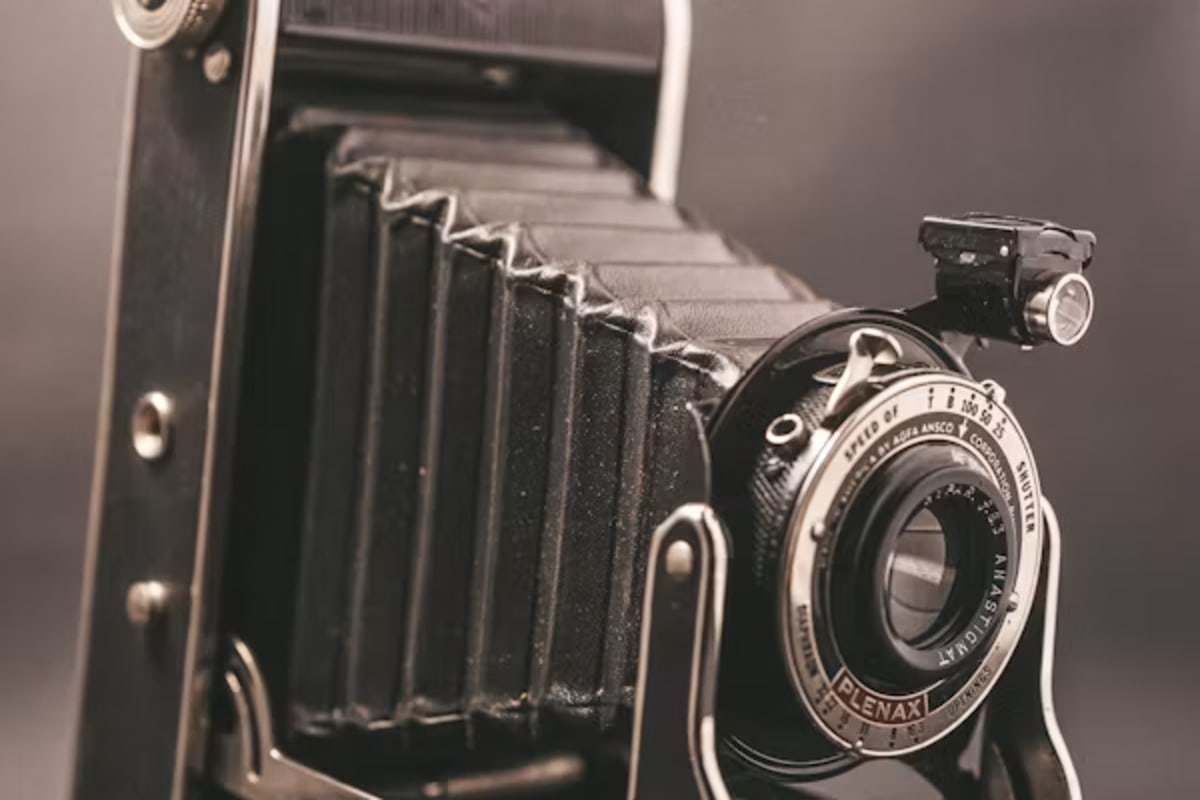
The inventor Louis Daguerre spent twelve years attempting to capture a visual reflection on a metal plate through the application of light. He did not originate this concept. Years before, he formed a partnership with Nicéphore Niépce, who created the earliest existing image on a plate made of pewter and coated in bitumen. As Niépce died in 1833, Daguerre used the remaining journals to improve a method that functioned with fewer errors and produced clearer visual results.
A Decade of Trial
By the end of the 1830s, Daguerre finished the development of this technique. He rubbed a copper plate covered in silver until the metal reflected light clearly. To make the surface react to light, he applied iodine vapors to the metal before he placed the plate inside a camera obscura. Developing the latent image required the use of mercury fumes and a solution of sodium thiosulfate fixed the image so that light no longer altered the surface. The daguerreotype displayed specific visual elements that observers could see clearly. In those images each brick, button and piece of cloth appeared with a level of precision that existed in no previous visual records.
The astronomer and politician François Arago identified that the finding was large in scale and significant. He promoted the work of Louis Daguerre to the French government because Arago stated that the invention was too valuable for one individual to own. Through a formal legal process in parliament, France negotiated a contract. In return for annual payments of 6 000 francs to Daguerre and 4 000 francs to Isidore Niépce for the duration of their lives, the government purchased the legal rights. The state then announced that the method was a gift "free to the world."
Free to the World
On August 19, 1839, members of the French Academy of Sciences and the Academy of Fine Arts held a collective meeting in Paris to reveal the technical details. A room filled with painters, researchers and observers watched as Arago distributed the specific chemical formulas. The reaction was immediate and intense. As news traveled, information reached other European cities and North America within a few weeks — but the gift was not accessible to every location without cost. To retain commercial control in certain regions, the agent Miles Berry filed an English patent on August 14, 1839. In Britain or British colonies, the law protected the process. Because of this patent, photographers who operated studios were required to purchase licenses that cost a high amount of money.
The commercial sector expanded rapidly in numerous locations - mechanics, chemists and artists established studios in urban centers between New York & Calcutta. The process allowed families with low incomes to obtain portraits because the cost was lower than that of painted art. Because the early technology required individuals to remain still for multiple minutes under bright light, subjects placed their heads against iron supports that were not visible - those braces caused the individuals to have rigid facial muscles and unsmiling looks.
A Fading Shine
By the late 1850s, methods that utilized glass plus paper replaced the daguerreotype because they functioned more quickly and cost less. Although the manufacturing of those items stopped, owners placed the plates behind glass within boxes covered in velvet. The containers protected the surfaces where the facial features of many individuals remained visible after multiple hundred years.
August 19 is World Photography Day - it is a commemoration of the date when the French government described the daguerreotype process in a public setting. The government provided the technical instructions to the international public without charging a fee. As a result the methods by which human beings document history and their peers are permanently different.
There’s always more to discover.