
An industrial city went to sleep on an ordinary night and woke, if it woke at all, to find the ground itself had betrayed it.
A City Struck Without Warning
At 3:42 a.m. on July 28, 1976, residents in Tangshan were sleeping when an earthquake occurred. With very little prior notice, the ground beneath the industrial area for coal mining moved and broke. It is a rare case where the center of the earthquake was located inside or very close to the city boundaries. As this location was urban, the event differed from earthquakes that happen far from the coast or in areas where few people live. In this instance the main shock had a magnitude between 7.5 and 7.8. For approximately 14 - 16 seconds, the ground shook with force - but this short period of time was sufficient for the event to knock down most of the city structures.
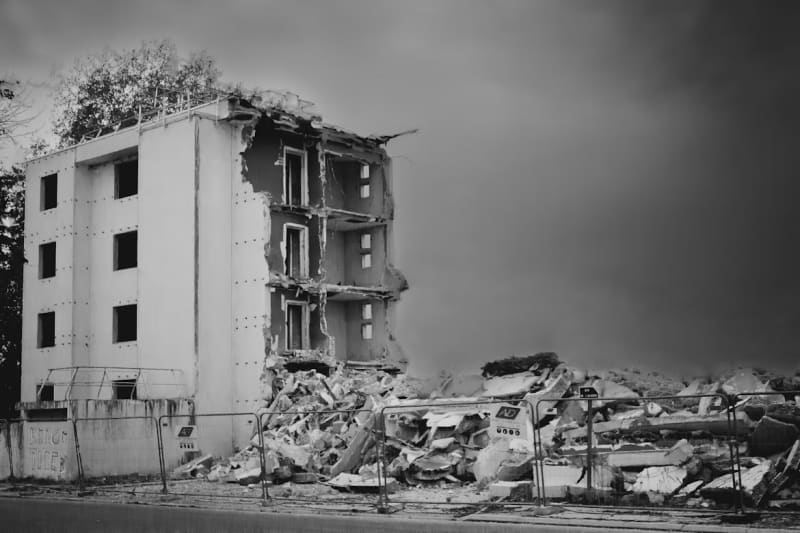
Due to the fact that experts did not classify Tangshan as an area where seismic activity was likely at that time, many buildings made of brick and stone did not have features to prevent damage from shaking. When the ground moved, many houses, apartments, factories and hospitals fell down. As those structures fell, they covered families and workers with broken building materials before the people could move. If one looks at the data, estimates show that more than 85 % to 90 % of the buildings in the city were broken or were in a state where individuals could not use them. And important systems for water, electricity, transportation and communication did not function over a large area.
Aftershock and Widening Destruction
In a development that increased the severity of the situation, an aftershock with a magnitude of approximately 7.1 occurred about 15 hours after the first earthquake - this event caused additional damage to buildings that were already unstable and made it more difficult for people to provide rescue assistance. Because this aftershock was strong, more people died plus those who attempted to find survivors trapped under debris faced physical danger. For the total region that sustained damage, the area covered tens of thousands of square kilometers. There was extensive destruction in cities like Tianjin and individuals as far away as Beijing felt the vibrations.
A Nation in Political Turmoil
The disaster occurred during a period of political instability in modern Chinese history. It happened during the final months of the Cultural Revolution but also multiple weeks before the death of Chairman Mao Zedong in September 1976. Due to the political environment and a policy that emphasized national self reliance, the Chinese government at first refused to accept foreign help or medical supplies from other nations. The government sent a high number of soldiers from the People's Liberation Army to the location of the disaster. By most accounts there were more than 100 000 soldiers present. As there was very little heavy machinery for them to use, the troops as well as the local people who survived used shovels, pickaxes and their hands to remove concrete or bent steel.
On a later date Chinese authorities published official data which stated that approximately 242 000 people died. And hundreds of thousands of people suffered injuries during this event. It is one of the earthquakes that caused the highest number of deaths in recorded history and is among the natural disasters with the greatest loss of life in China.
By some other reports and foreign estimates, the number of individuals who died was possibly much higher, reaching between 600 000 and 650 000 individuals. These same reports suggest injuries may have also affected multiple hundred thousand people - but the precise count of casualties is still a subject of debate because the destruction was extensive plus conditions were disorganized after the disaster.
To describe the impact, the earthquake destroyed whole neighborhoods and killed all members of many families. As a result tens of thousands of children no longer had parents.
Rebuilding Tangshan
In the following years, workers rebuilt Tangshan gradually - reconstruction was a national project that lasted for a long time. It focused on the restoration of industry and on making the city more capable of withstanding future earthquakes. For this purpose new building codes but also infrastructure projects prioritized seismic safety - those projects included measures like structures that are stronger, lifeline systems that are more flexible and embankments and reservoirs that are reinforced.
Tangshan is a major modern city again - its current state is evidence that humans can recover from disasters. And it is a reminder that the ground can move suddenly.