A Life Cursed by the Sky
The life of Roy Cleveland Sullivan appeared to be affected by constant misfortune from the sky. He worked as a park ranger in Shenandoah National Park in Virginia. He survived seven strikes from lightning between the 1940s and the 1970s, and Guinness World Records recognizes him as the person lightning hit more times than anyone else on Earth - he earned nicknames like "Human Lightning Conductor" and "Human Lightning Rod." Sullivan's experiences are an example of physical toughness and strange luck. The end of his life was sad and had nothing to do with the storms that made him famous.
Sullivan described the details of every strike. The park's records include all seven events, but no one saw the strikes directly: they contain Sullivan's own accounts and the physical evidence of the damage.
In the first event during the 1940s, Sullivan was inside a fire lookout tower. Lightning hit the structure multiple times and caused a fire. As he ran away lightning struck the ground close to him, and it burned a line of skin on his leg, injured his toe, and made a hole in his shoe.
Seven Strikes, One Unlucky Man
On a mountain road in the late 1960s, he drove a truck during a storm. Lightning hit trees nearby and entered through the open window of the vehicle. The bolt knocked him unconscious, and it burned off his eyebrows and eyelashes and set his hair on fire. The truck kept moving without a driver and stopped at the edge of a steep drop.
In 1970 Sullivan stood in his yard when lightning hit a power transformer nearby. The electricity moved to his shoulder and burned the skin.
In the early 1970s, a lightning bolt entered a park building and set his hair on fire. He pressed his jacket against the flames and then used a wet towel to stop the fire. After this event Sullivan believed that some force was aiming those strikes at him, so he carried a container of water during his shifts because he worried that his hair would catch fire again. The later strikes proved him right.
In 1973 Sullivan saw a storm cloud during his patrol and drove away. He stated that the cloud moved in the same direction as his truck. He got out of the truck because he thought he was safe, but the bolt hit him immediately. The current moved through one arm and one leg. It knocked his shoe off and also traveled to his other leg. The heat set his hair on fire. He stayed awake and crawled back to the truck, and he used his emergency water to put out the fire on his head.
Another strike happened in the middle of the 1970s - Sullivan tried to run because he felt the storm was following him. The lightning hit his body. It injured his ankle and his hair burned again.
The seventh strike hit Roy Sullivan in 1977 while he was fishing in a freshwater pond. The bolt hit the top of his head and burned the skin of his chest and stomach. As he told it, a bear came toward him to take the trout off his line, and he used a tree branch to drive the animal off while his hair smoked. He said he had fended off bears with a stick many times in his life.
Guinness World Records recognizes Roy Sullivan as the only person who survived seven lightning strikes. The official status is based on his own accounts.
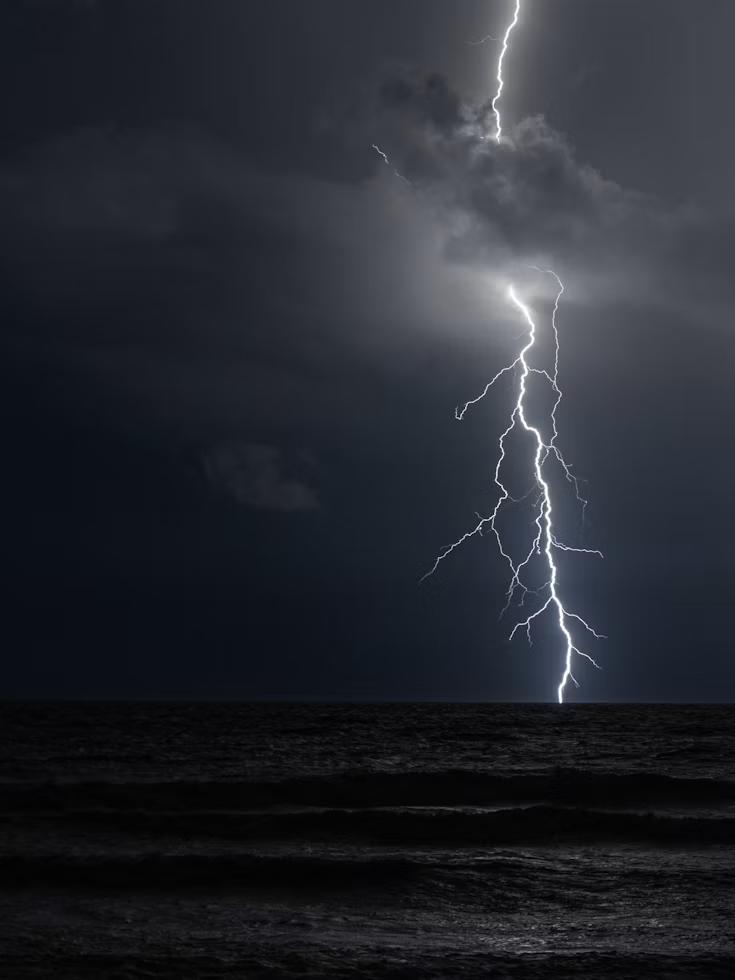
A single lightning strike carries a huge amount of power: it carries hundreds of millions of volts and tens of thousands of amps of current. The chance of being hit by lightning is low, and the chance of seven strikes is extremely low.
The Storm He Couldn't Outrun
The public attention led to media interviews in the early 1980s, but it also left him lonely. His coworkers and neighbors moved away from him whenever storms came in. He described walking with the Chief Ranger when lightning struck in the distance. The Ranger said, "I'll see you later" and left him immediately. On one occasion lightning struck his wife while the two of them hung wet clothes on a line. She was hurt while he stood next to her, unharmed. To keep his family safe, he sat by himself in the kitchen during storms, afraid his "attraction" would hurt them.
Roy Sullivan died from a self inflicted gunshot wound in Dooms, Virginia, in September 1983, at age 71. It came after a period of extreme emotional pain. Guinness states that he died "by his own hand, reportedly rejected in love." Both contemporary reports and subsequent articles repeat this explanation, but it is a secondhand account, not a proven motive.
Roy Sullivan's legacy continues through two scorched ranger hats displayed in Guinness World Records exhibit halls. Beneath the public spectacle, they carry a serious lesson. His story is an example of how a person can survive the raw power of nature. It is a reminder that lightning is unpredictable and dangerous. It is also a reason to take seriously the private struggles behind unusual public lives. The sky, it turns out, was not Roy Sullivan's deadliest opponent.